

It’s more fun in the Philippines at Christmas –trust me.
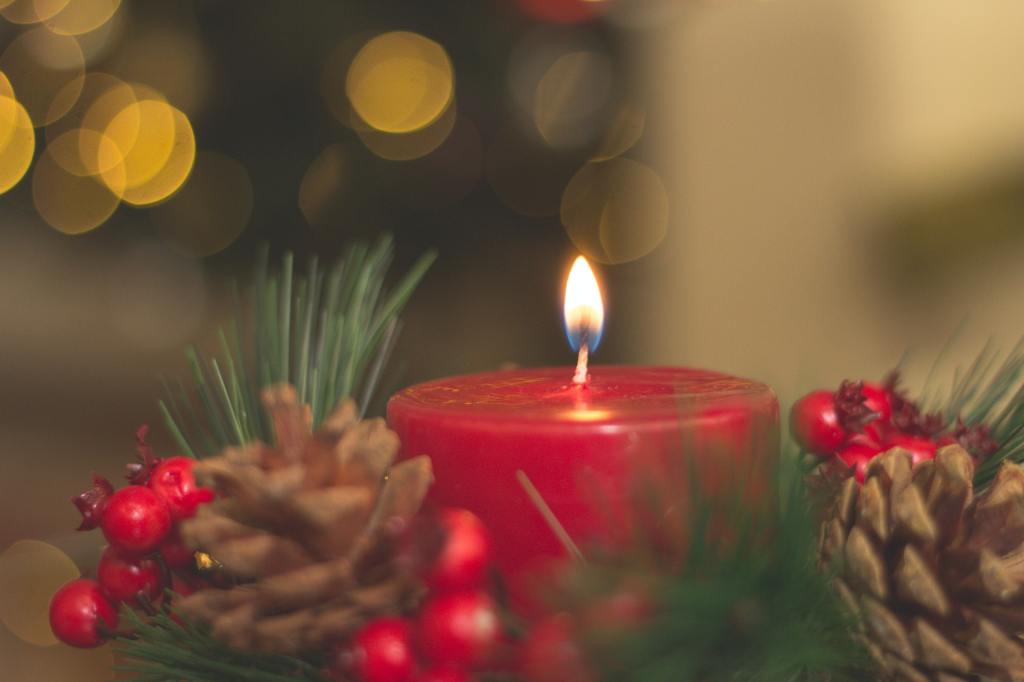
It’s that time of the year again… as soon as the “ber” months start (SeptemBER) it signals the start of the much anticipated Christmas season in the Philippines. Christmas is pretty much a big deal for most Filipinos. Its a time for family get-togethers, a rekindling of family love. A number of OFWs (Overseas Filipino Workers) we have make it a point to come home, saving their vacation leaves solely for this season.
I’d like to share with you some of our treasured traditions so you can celebrate this wonderful season with us.
1. Christmas Songs and Music
As soon as September hits, don’t be surprised to hear Christmas songs being played in malls and commercial establishments. “Christmas in our Hearts” is an iconic song by Jose Mari Chan and daughter Liza Chan. It is like the theme song of Christmas in our country. Personally, when I hear this song being played, my heart is filled with warmth and memories of childhood fun and family get togethers.
2. Christmas Decors: Parol and Belen
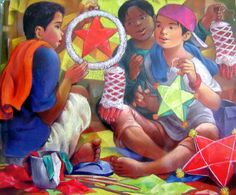
Filipino Christmas wouldn’t be complete without the Parol adorning every home or establishment. The Parol or Christmas lantern is a star shaped light that is placed in front of every home to signal the start of the Christmas season. It was symbolic as the star of Bethlehem which guided the three wise men in the search for the birth place of the Messiah.
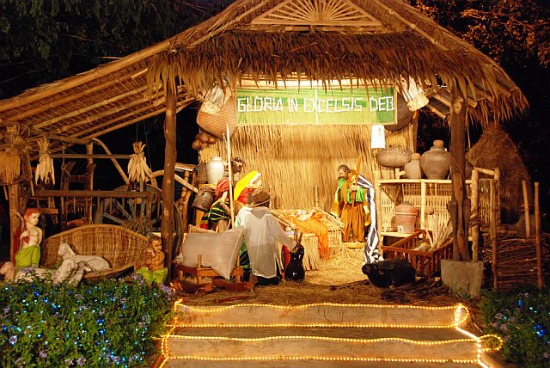
The Belen or The Nativity Scene is usually a depiction of the holy couple, Mary and Joseph and the baby Jesus in a manger along with the three kings, shepherd and animals in the stable. It is a reminder to everyone about the true meaning of Christmas and is deeply rooted in our roots as predominantly Christians. Most Catholic churches and Filipino homes have the Belen displayed alongside our Christmas decors.
3. Caroling
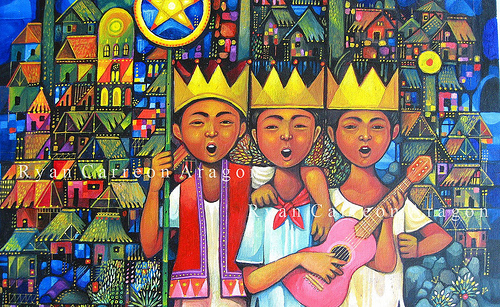
Christmas caroling usually starts every 16th of December the same time as the Simbang Gabi. But nowadays, kids who like to earn a little start caroling on December 1. Traditionally, kids just make their own musical instrument like soft drink bottle caps stringed together to serve as a homemade tambourine. But teens and older carolers usually bring their guitars and and violins to go around houses and sing Christmas carols. If you are spending Christmas in our shores, make sure you have a lot of coins at home so you have something to give once they sing in front of your house. Its a fun filled tradition where we get to practice the season of giving by sharing our blessings with these carolers.
4. Simbang Gabi or Misa De Gallo
Simbang Gabi literally means “Evening Mass”, it is a 9 day devotional novena mass which starts from Dec 16-24 leading to Christmas day. This tradition dates back to the Spanish colonization era in the 1600s where it was usually celebrated at the start of Advent in the Catholic calendar as “dawn masses” or Misa De Gallo. But we still practice both of them so take your pick.
Most church goers attending the Simbang Gabi or Misa de Gallo often have a wish or a prayer intention so it gives them more reason to complete these masses. Filipinos have a strong faith in God, so it doesn’t come as a surprise that this tradition is still being followed to this day.

5. Puto Bumbong and Bibingka
After you attend the dawn masses, what better way to remind you it’s Christmas time other than these local delicacies. It’s like the official meal after Misa De Gallo. These are often sold outside the church.
Puto Bumbong is made from powdered purple rice or sometimes mixed with purple yam (ube) and cooked by steam inside a bamboo tube which we call “bumbong”. Once cooked, it is placed in banana leaf, and then topped with butter and sprinkled with grated coconut and brown sugar. Eat it steaming hot as soon as it comes out of the bamboo tube for better taste. Bibingka is also a type of rice cake, also cooked by steaming. It looks like a bloated pancake and is also a favorite after simbang gabi or Misa De Gallo.

https://www.lutongpinoyrecipe.com/snacks/puto-bumbong/
6. Noche Buena and Media Noche Feast
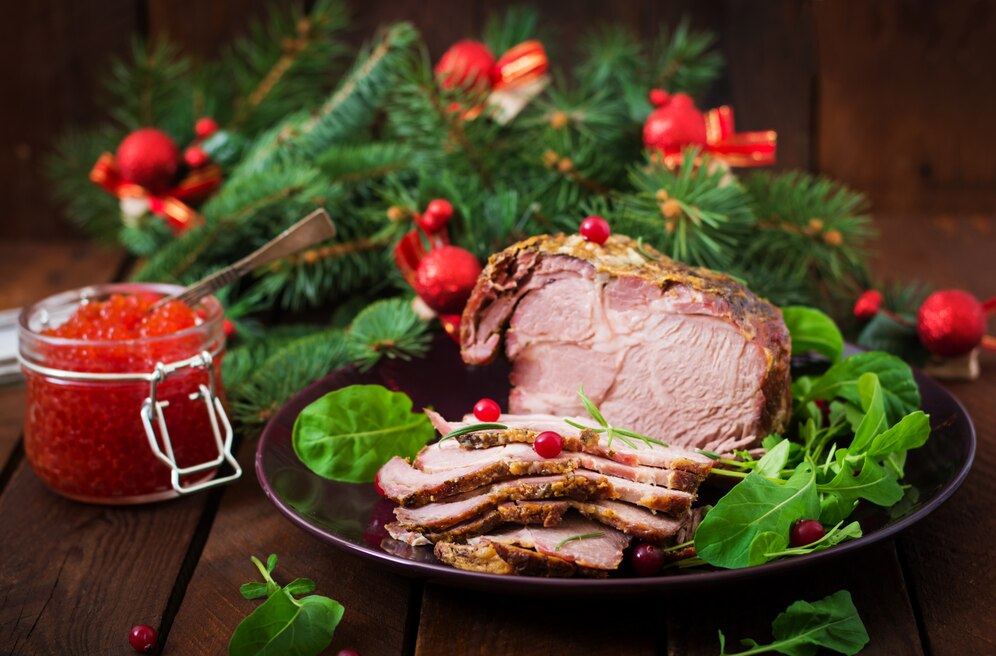
Noche Buena in Spanish means “Good Evening”. For us Filipinos, Noche Buena is the Christmas eve feast where families are gathered to share food after attending the Simbang Gabi usually at midnight. Among the favorites being served is the Hamonado and Queso De Bola. For those who belong to the middle or upper class homes, they usually also serve lechon, paella, pinoy fruit salad or macaroni salad and/or fruit cake.
Media Noche, is what we call the lavish spread of food we serve during New Year’s Eve or the BIsperas ng Bagong Taon in Filipino. Owing to the Spanish influence, Media Noche came from the spanish word for “midnight”. Some Filipino families do not prepare for noche buena, but you can be sure that they don’t skip out preparing for the Media Noche feast. We have this belief that having an abundance of food during Media Noche signifies prosperity and the influx of good fortune for the coming year. Usually, 12 different round fruits are adorned in each table to signify this belief of abundance. Fireworks and firecrackers are also prepared in preparation for New Year’s countdown. It is a belief that the noise the firecrackers makes will drive away bad luck for the coming year.
Celebrating Christmas – Filipino style isn’t just limited to following these traditions. As you immerse yourself in our culture, you will find that the true essence of Christmas is very much alive in our shores. It is a remembrance of the birth of Christ, the reason for all the festivities. A season of hope for the hopeless, and something to look forward to as the year ends.
To us, Christmas is the spirit of giving and the warmth and comfort that you will find in our homes as we celebrate with friends and family. It is beyond the gifts we give to each other or the traditions that we follow. It is in the spirit of togetherness, evident in families poor or rich in our communities. Maligayang Pasko and Manigong Bagong Taon! (Merry Christmas and a Prosperous New Year!)

Discover more from Ettenyl Writes
Subscribe to get the latest posts sent to your email.

